Every day as I get my son ready for daycare, I recite seven words: “Hey Google, what’s the weather like today?” The results from this now-‘ritual’ search dictate what he’ll wear, what type of extra clothes I will pack, and whether we’ll need a jacket for the bike ride.
Whatever way you seek to learn the day’s forecast, the medium that you’re consulting isn’t physically measuring or predicting the weather but is relaying the measurements and predictions of those that do in a digestible manner. The Internet plays a significant role in distributing and communicating this information but also helps meteorologists collect data from all parts of the world, including remote sensors, to improve these predictions.
Meteorologists will be the first to admit they don’t always get their predictions right. However, they do an exceptional job considering the thousands of different factors they need to account for, and hundreds they can’t, to determine why it rained in one neighborhood but didn’t in the next. The fact that you can get such localized weather conditions is a modern marvel that most take for granted.
Considering society’s reliance on reliable, secure, and increasingly fast Internet connectivity, measuring the Internet is similarly important and challenging as predicting the weather and measuring the climate. It’s why we established Internet Society Pulse, which in many ways works like your weather app to provide a snapshot of the health, availability, and evolution of the Internet.
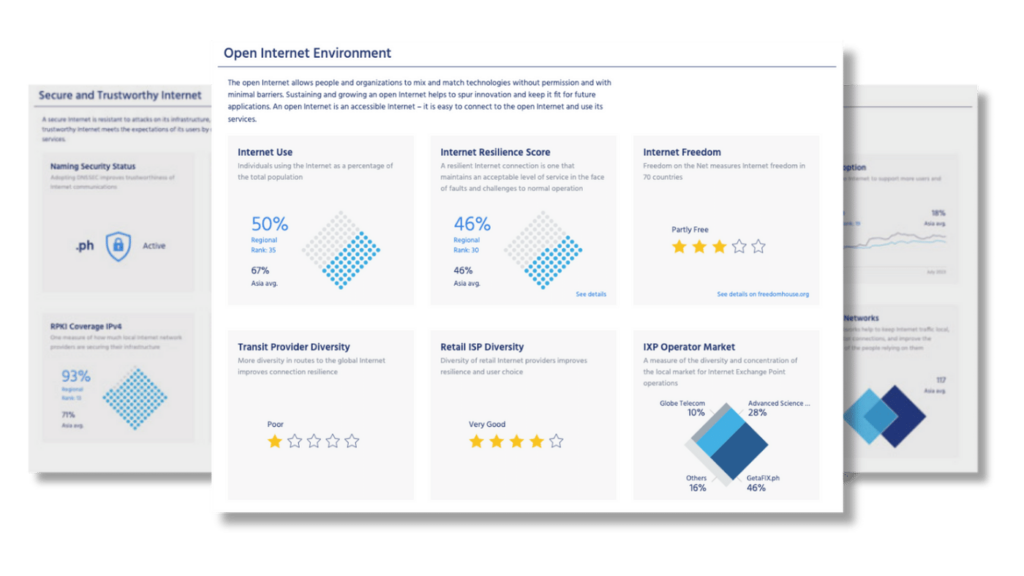
While the Internet is not bound by geopolitical borders, it’s natural that many people are interested to know the strengths and weaknesses of the Internet in their own country. The Internet Society Pulse Country Reports help with this by consolidating and providing context surrounding the four Pulse research themes for every country, state, and region globally.
Comments
Post a Comment